Outreach and promotion – how to get attention of international students
What are the best practices? What are the most common mistakes? And how to factor in competition and external partners?
The fact is that for prospective students who just started researching their possibilities, there are usually plenty universities to choose from. They use LLMs, research social networks, university websites, sites like studyportals.com, attend events online and offline, hoping to find exactly what they need.
The first part of the marketing funnel your prospective students go through is Awareness – basically if your audience does not know about you, you can’t try to persuade them to learn more and eventually thread the path to conversion event – admission.
It is important to note that awareness does not occur automatically once the prospect sees your logo or even visits your website. If they find everything totally forgettable, all your awareness-level analytics will trigger, but the actually process in the mind of your prospect won’t.
How to make sure your institution sticks out enough so that the students a) notice it and b) remember it?
Quick mental exercise: Why should they choose you? Maybe you have the best programmes in their field, the most international campus, reasonable price/cost of living ratio, great research and unique facilities. And maybe 20 other universities claim that as well.

You can shout all of your institution’s advantages to the digital void, and wait till one of them sticks, bringing you prospective students. This is called “spray-and-pray” technique, targeting large general audience with plenty of messages, hoping that sheer numbers will bring results.
While it is modern to look down on this approach, in reality it is often very convenient choice, since analytics needed for proper audience segmentation are not always at hand for university marketing. Its disadvantages lay mainly in high probability of botching the first impression, high cost of any paid efforts (no matter if you pay per submission form, ad display, prospect brought, e-mail sent, etc.), and the inability to reasonably qualify/disqualify prospects from the follow-ups.
Is it prudent to try to segment and raise effectivity of communication in the chosen niche?
Imagine a pie, from which you can currently eat a ¼ segment. If you could choose to widen your slice by 10% (by making your message more general) or to keep the slice width and make the whole pie 10% larger (by diving deeper into the chosen niche), what would result in larger slice?
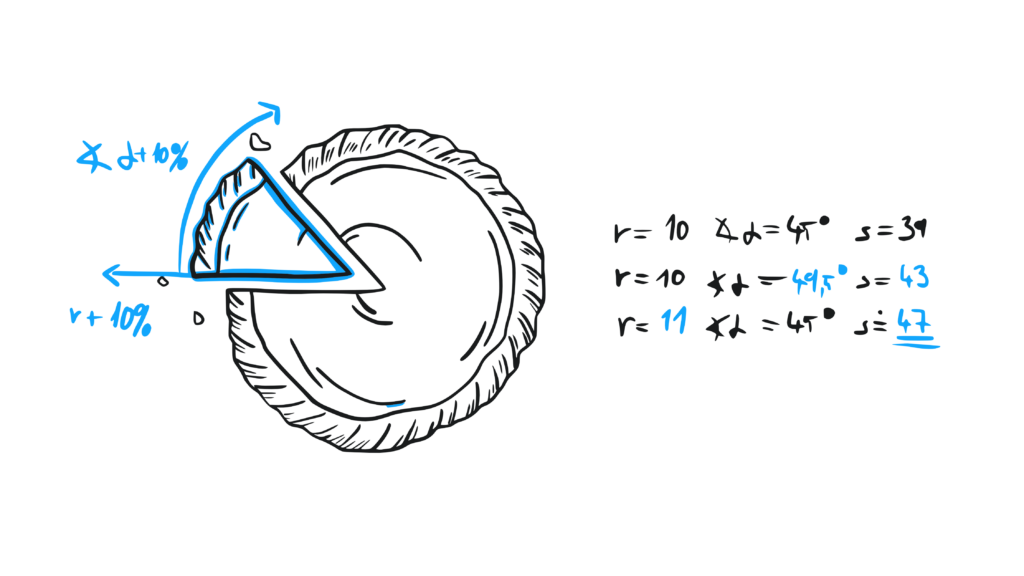
This larger pie diameter will result in larger portion compared to just widening the slice. This applies to marketing as perfectly. Going deeper means targeting more relevant audience, getting better understanding of your target group, more precise messaging in whole admission process, better allocation of funds and resources, and less overhead work with irrelevant leads.
Going deeper does not mean simply choosing what to promo – it means asking your converted audience (AKA current international students) lot of questions. Just be aware of potential blunders – if you ask them which of your communication channels had an impact, you will lack data on what other activities would be effective. If you only ask them why they chose you among the competition, you won’t get information on why they decided to study abroad in the first place. Consider using an interview template – we can create one just for you.
The goal of the analysis needed for deeper research of your audience is based on finding their driver – usually a pain you can solve or desire you can fulfil. This is a Product Marketing approach, which results in a clear product–market fit (even though we could argue about the study programmes being more of a service, the distinction for this case is not important).
Thanks to the product–market fit, you can clearly pinpoint:
- what segment of audience you need to target,
- what is their driver (pain/desire),
- how your institution solves their pain/fulfils their desire.
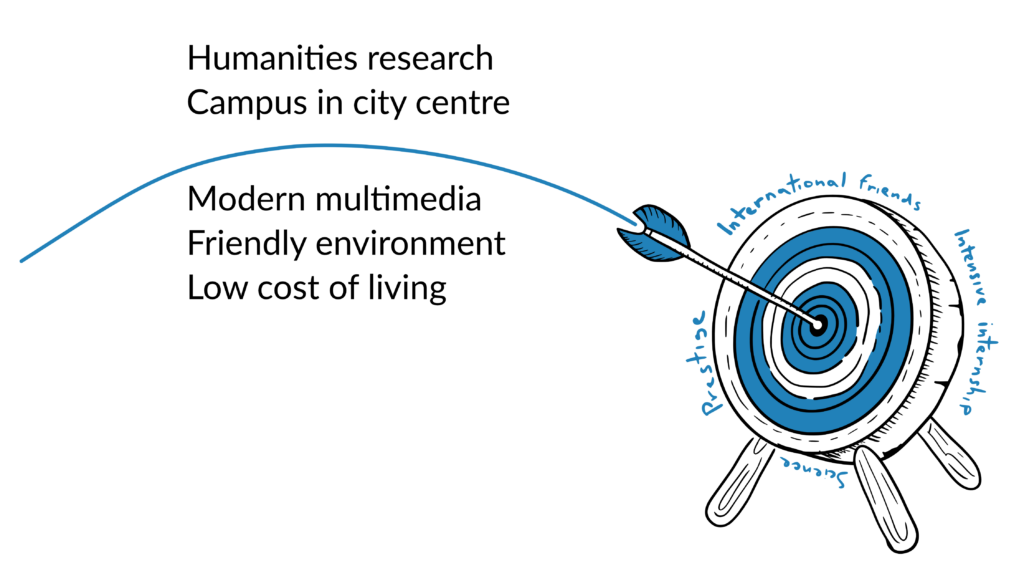
Moreover, you can find out how they did their research, what was the decisive factor, what was the role of other stakeholders (usually parents), etc. Without asking first, you are driving your marketing vehicle blind, which is at best not effective, and at worst dangerous.
Beware the pitfalls and know the limitations
Conducting these interviews and other initial research is a separate discipline which takes skill and experience. It is not exactly a rocket science, but without knowing how to ask and how deep to go you might end up with large pile of mostly irrelevant data.
Always make sure to push a one level deeper than what you would consider “normal”. For example, if you ask what drove the student to choose your institution and they say that your Chemistry programme was the best, ask them why they think it was the best. If they say that it is because of plenty of practical classes, ask them why they are important. If they say that because in their country you need them to get a better-paid job, ask them why they decided to choose a university abroad. Always push for more, until you clearly hear a sentence shaped like this: “My problem was that/I needed to/I wanted to _________ because of __________”.
Make sure not to fall for plain statements like “I just wanted to study abroad”. There is always a reason why. Look for patterns in the interview, and among the larger sample of interviews. Only then you can base your marketing decision on reasonable data.
If you need help with the preparation and conducting the interview, let us know. We can guide you through the whole process including interpretation of the results, or at least to provide a starter kit which includes an interview template, guide to qualitative research, and mode of results interpretation.